
Why Kids Freeze When Speaking in Class and How Practice Helps

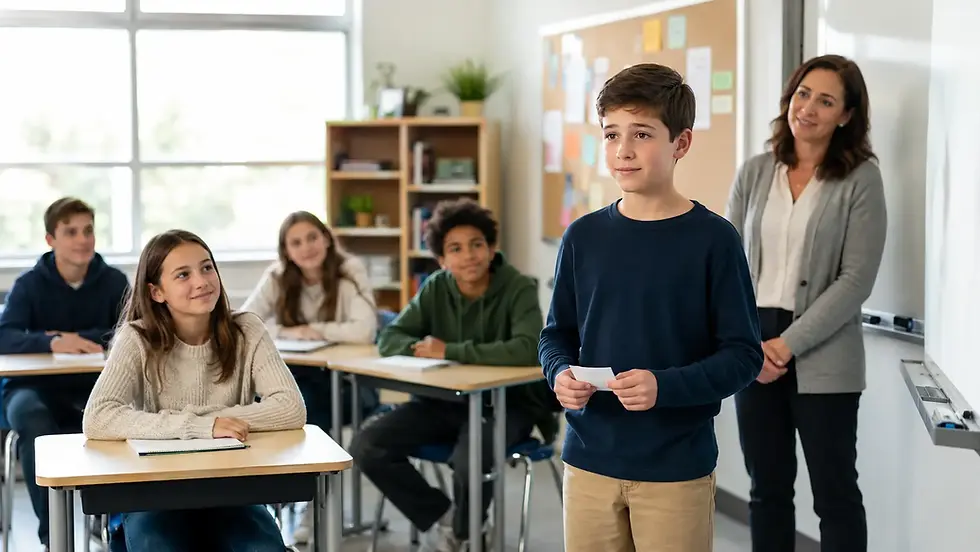
A child can know the answer, understand the assignment, and still freeze the moment all eyes turn toward them.
Parents see this often. At home, their child may explain an idea clearly, debate a point at the dinner table, or talk nonstop about something they love. Then, in class, the same child goes quiet. Their voice drops. Their mind goes blank. They avoid eye contact. They say, "I don't know," even when they do.
This can be frustrating for parents, but even more so for the child. Most kids do not freeze because they are lazy, careless, or incapable. They freeze because speaking in front of others can feel exposed. The pressure rises quickly, and the brain reacts before the child has time to think clearly.
The good news is that freezing is not a permanent trait. It is a response that can improve with practice, structure, encouragement, and the right environment.
Public speaking is not just about giving speeches. It helps kids and teens learn how to organize their thoughts, use their voices, manage nerves, respond to questions, listen carefully, and express themselves in school, social, academic, and high-stakes situations. These skills matter in class discussions, presentations, debates, interviews, group projects, leadership opportunities, and everyday conversations.
Most importantly, kids do not need to be naturally outgoing to become stronger speakers. Quiet, shy, thoughtful, and nervous students can all learn to communicate with more confidence.
Why Kids Freeze When Speaking in Class
When a child freezes, it may look like they do not want to speak. That is rarely the full story.
For many kids and teens, speaking in class creates a mix of emotional and mental pressure. They may worry about making a mistake, being laughed at, sounding "weird," forgetting their words, or being judged by classmates. Even confident adults can struggle under that kind of attention, so it should not surprise us when young students do.
Freezing often happens when several things collide at once:
The student lacks a clear structure in their answer.
They are trying to sound perfect instead of simply being clear.
They have not practiced speaking out loud.
They are worried about how others will react.
They are unsure how to recover if they make a mistake.
They feel rushed and cannot organize their thoughts quickly.
That last point matters. Many kids do not freeze because they have nothing to say. They freeze because they have too many thoughts at once and no reliable way to sort them.
This is where public speaking practice becomes powerful. It gives students repeatable tools. Instead of hoping confidence magically appears, students learn what to do before, during, and after speaking.
Freezing Is Often a Skill Gap, Not a Character Flaw
Parents can unintentionally make speaking anxiety worse by treating it as a personality issue.
"He's just shy."
"She has no confidence."
"He hates presenting."
"She's not a public speaker."
Those statements may feel harmless, but kids hear them. Over time, they may come to believe that struggling to speak is just who they are.
That is not fair and not accurate.
Public speaking is a skill. Confidence is a skill. Thinking on your feet is a skill. Answering questions clearly is a skill. Like reading, writing, math, music, or sports, communication improves when students practice correctly and consistently.
A student who freezes today is not broken. They are underprepared for a situation that requires several skills at once: clear thinking, voice control, body language, emotional regulation, listening, and quick response.
That is a lot for a young person to manage without training.
The goal is not to turn every child into the loudest person in the room. Frankly, the world already has enough loud people. The real goal is to help kids become comfortable using their own voice.
Want your child to become more comfortable speaking in front of others? Explore our kids' and teens' public speaking courses, where students practice communication skills in a supportive, coach-led environment.
How Practice Builds Confidence
Confidence does not usually grow from one pep talk.
Parents may say, "Just relax," or "You'll be fine," or "Don't be nervous." The intention is good, but those words rarely solve the problem. A nervous child already wants to relax. They do not know how yet.
Confidence grows when students practice a difficult task in manageable steps and experience small wins.
A child practices introducing themselves.
Then they answer a short question.
Then they speak for 30 seconds.
Then they present a short idea.
Then they respond to a follow-up question.
Then they participate in a discussion.
Each step teaches the child, "I can handle this."
That is how speaking confidence develops. Not through pressure. Not through embarrassment. Not through forcing a child to perform before they are ready. It develops through repetition, structure, coaching, and encouragement.
At Stand Up and Speak, students practice speaking in a supportive environment where mistakes are part of the learning process. That matters because kids need a place where they can stumble, try again, and improve without feeling judged.
For students who need structured practice, our confidence-building public speaking programs help kids build comfort step by step.

Clear Organization Helps Kids Stop Going Blank
One of the biggest reasons kids freeze is that they do not know how to organize their thoughts quickly.
They may know the answer, but the moment they start speaking, their ideas come out in the wrong order. They start with one thought, jump to another, forget the main point, and then panic.
A simple structure can make a huge difference.
For example, students can learn to answer using this pattern:
State the main idea.
Give one reason.
Add an example.
Finish with a short closing sentence.
This gives kids a path to follow. Instead of trying to memorize every word, they learn how to organize ideas in real time.
That structure helps with classroom answers, presentations, debates, interviews, and group discussions. It also improves writing because clear speaking and clear writing both start with clear thinking.
When students know how to structure their ideas, they feel less trapped by the pressure of the moment.
Body Language and Eye Contact Reduce the Feeling of Panic
Nervous students often send nervous signals before they say a word.
They look down. They shift their weight. They cross their arms. They hide behind notes. They turn their body away from the audience.
These habits are understandable, but they can make the student feel even smaller.
Public speaking practice helps kids become more aware of body language in a practical way. They learn to stand with balance, look at friendly faces, use natural gestures, and maintain an open posture.
Eye contact does not need to be intense or uncomfortable. Students can learn to look at one person for a moment, then another, then another. This makes speaking feel more like a conversation and less like a performance under a spotlight.
The goal is not to create perfect stage presence. The goal is to help students look and feel more comfortable while communicating.
Managing Nerves Is More Realistic Than Eliminating Nerves
Many students believe strong speakers do not get nervous.
That is false.
Strong speakers still feel nerves. They have learned how to manage them.
This is an important message for kids and teens because they often think nervousness means they are failing. It does not. A racing heart, shaky voice, or sweaty hands can happen before important moments. The skill is learning what to do next.
Students can manage nerves by:
Practicing out loud before the real presentation.
Taking a steady breath before starting.
Using a clear opening sentence.
Slowing down instead of rushing.
Focusing on the message, not perfection.
Learning how to recover after a mistake.
Recovery is one of the most important skills. If a student forgets a word, loses their place, or makes a small mistake, they need to know that the moment can continue. A mistake is not the end of the speech. It is just a bump in the road.
That lesson alone can reduce fear.
Practice Helps Kids Think on Their Feet
Classroom speaking is not always scripted.
A teacher may ask a surprise question. A classmate may challenge an idea. A group project may require a quick explanation. A debate may require a student to respond immediately.
Kids who have not practiced thinking on their feet often freeze because they believe they need the perfect answer right away.
They do not.
They need a calm first step.
Students can learn to pause, repeat, or reframe the question, choose one clear point, and answer in a simple structure. This takes practice, but it is absolutely learnable.
Impromptu speaking activities are especially helpful because they teach students how to respond without memorizing. Over time, students become less afraid of unexpected questions because they have practiced handling them.
This skill becomes valuable far beyond school. It helps with interviews, leadership opportunities, university preparation, social situations, and future workplace conversations.
If your teen wants to get better at answering questions, participating in discussions, or preparing for interviews, Stand Up and Speak offers programs that build confidence, quick thinking, and clear communication.
Storytelling and Examples Make Speaking Easier
Kids often freeze because they think every answer has to sound formal or impressive.
In reality, strong communication often comes from simple examples and stories.
When students learn to support ideas with examples, speaking becomes easier. They are not just reciting information. They are explaining something in a way people can understand.
For example, instead of saying, "Responsibility is important," a student can tell a short story about caring for a pet, helping a teammate, or preparing for a test.
Stories give students something concrete to hold onto. They also make presentations more engaging.
This matters for school presentations, interviews, debates, and leadership applications. A student who can explain an idea with a relevant example will usually sound more confident, prepared, and thoughtful.
Better Listening Creates Better Speaking
Public speaking is not only about talking.
Strong communicators listen well. They pay attention to questions, understand other points of view, and respond respectfully.
This is especially important for kids and teens because so many school and social situations require back-and-forth communication. Group projects, debates, classroom discussions, interviews, and peer conversations all depend on listening.
When students practice active listening, they become better at:
Understanding what is being asked.
Responding to the actual question.
Building on another person's idea.
Disagreeing respectfully.
Staying calm during discussions.
This helps students become more comfortable speaking with both peers and adults. They learn that communication is not about dominating the room. It is about participating clearly and respectfully.
How Parents Can Help Without Adding Pressure
Parents play a major role in helping kids build confidence in communication.
The key is to create low-pressure speaking opportunities at home without turning every conversation into a lesson. Kids can smell a "teachable moment" from across the house.
Use too many of them, and they will head for cover.
Instead, keep it natural.
Ask your child to explain their opinion on a movie, game, book, or school topic. Have them tell a short story at dinner. Ask follow-up questions. Encourage them to give reasons for their opinions. Let them practice ordering food, speaking to a coach, or asking a question at a store.
Praise effort and clarity, not perfection.
Instead of saying, "You were amazing," try saying:
"I liked how clearly you explained your first point."
"You paused and kept going even when you forgot a word."
"That example made your idea easier to understand."
"You looked more comfortable the second time."
Specific feedback helps kids understand what they did well and what they can repeat. There are several public speaking activities parents can do at home with their kids.
Parents should also avoid labeling a child as shy or nervous in front of others. A better message is: "You are learning how to speak with more confidence, and practice will help."
That is more accurate and far more useful.
Why the Right Environment Matters
Not all practice feels safe.
Some kids have been embarrassed during presentations. Some have been laughed at. Some have felt ignored, rushed, or criticized. Those experiences can make speaking feel risky.
That is why the environment matters.
Students need a place where they can practice with guidance, receive useful feedback, and see other students working through the same challenges. They need to know they are not the only one who gets nervous.
A supportive public speaking class gives students repeated chances to speak in front of others without the pressure of grades or social judgment. Over time, speaking becomes familiar. Familiar does not always mean easy, but it does mean less frightening.
This is especially important for shy, quiet, or unsure students. They do not need to become someone else. They need practice becoming more comfortable with themselves.
Public Speaking Helps Far Beyond Speeches
Parents sometimes think public speaking is useful only when a child has a presentation coming up.
That is too narrow.
Communication skills show up everywhere.
They help kids answer questions in class, participate in group discussions, present projects, speak to teachers, make friends, resolve disagreements, prepare for interviews, take on leadership opportunities, and express ideas clearly.
For teens, these skills become even more important. University interviews, scholarship applications, volunteer roles, part-time jobs, internships, debates, and leadership programs all reward students who can communicate with clarity and confidence.
Public speaking practice helps students build the habits they will need long before the stakes are high.
That is the real value. It is not about one perfect speech. It is about helping students become more confident communicators in the moments that shape their lives.
For students preparing for a school presentation, interview, or important academic opportunity, presentation and interview coaching can provide focused one-on-one support.
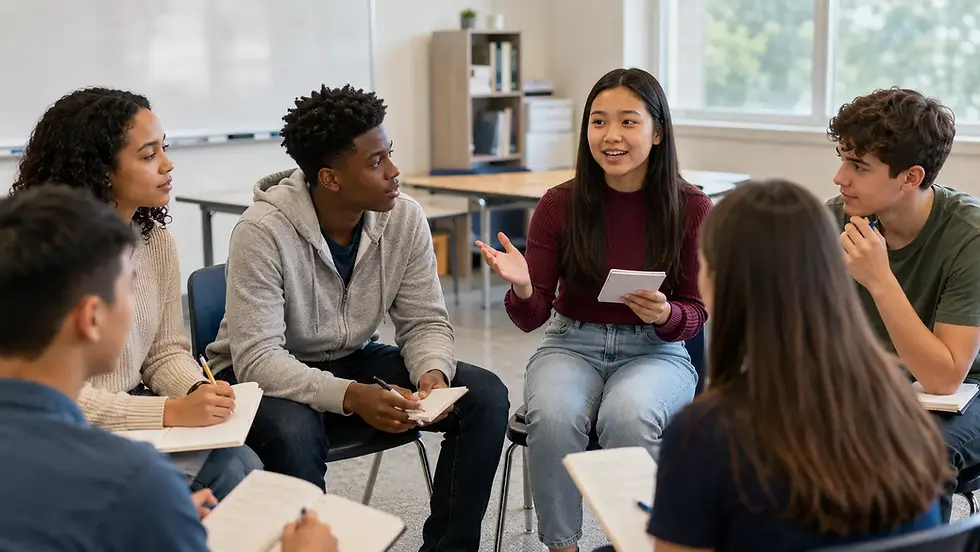
When a Child Freezes, Practice Gives Them a Way Forward
A child who freezes when speaking in class does not need shame, pressure, or a lecture.
They need tools.
They need to know how to organize their ideas, use their voice, manage nerves, make eye contact, listen carefully, respond to questions, and recover when something goes wrong.
Most of all, they need enough practice to believe, from experience, that they can handle speaking in front of others.
That belief does not appear overnight. It grows through repeated, positive speaking experiences.
At Stand Up and Speak, we help kids and teens build confidence, communication, presentation, and debate skills, interview readiness, and the ability to think clearly under pressure. Our programs are designed to help students become more comfortable expressing themselves in school, social, academic, and high-stakes situations.
If your child freezes when speaking in class, that does not have to be the end of the story. With preparation, practice, structure, and encouragement, they can learn to speak more clearly, participate more confidently, and trust their own voice.
Freezing in class is only one part of the bigger picture. Learn more about how public speaking training helps kids in the long term.
Explore Stand Up and Speak programs for kids and teens and help your child build the communication skills they will use for life.
FAQ Section
Why do kids freeze when speaking in class?
Kids freeze when speaking in class because they feel pressure, fear judgment, or struggle to organize their thoughts quickly. Freezing does not mean a child lacks intelligence or ability. It usually means they need more practice, structure, and support in speaking in front of others.
Can public speaking classes help shy kids?
Yes. Public speaking is especially helpful for shy, quiet, or nervous students because it provides a safe space to practice. The goal is not to change their personality. The goal is to help them feel more comfortable expressing themselves clearly.
How can parents help kids become more confident speakers?
Parents can help by creating low-pressure opportunities to speak at home. Ask your child to explain an opinion, tell a story, answer follow-up questions, or practice a short presentation. Praise effort, clarity, and improvement rather than perfection.
How does practice help kids manage nerves?
Practice makes speaking feel more familiar. When students rehearse out loud, learn how to structure ideas, and practice recovering from mistakes, they become less afraid of the moment. Nerves may still happen, but students learn how to manage them.
Are presentation skills important for teens?
Yes. Presentation skills help teens participate in class, present school projects, prepare for interviews, join leadership opportunities, communicate with adults, and express ideas clearly. These skills support school success and future readiness.
Is public speaking only for outgoing kids?
No. Public speaking is not only for outgoing students. Many quiet or reserved kids become strong communicators because they learn to organize their thoughts, use their voices, manage their nerves, and speak with confidence in their own style.


Comments