
Why Debate Teaches Kids to Respectfully Disagree

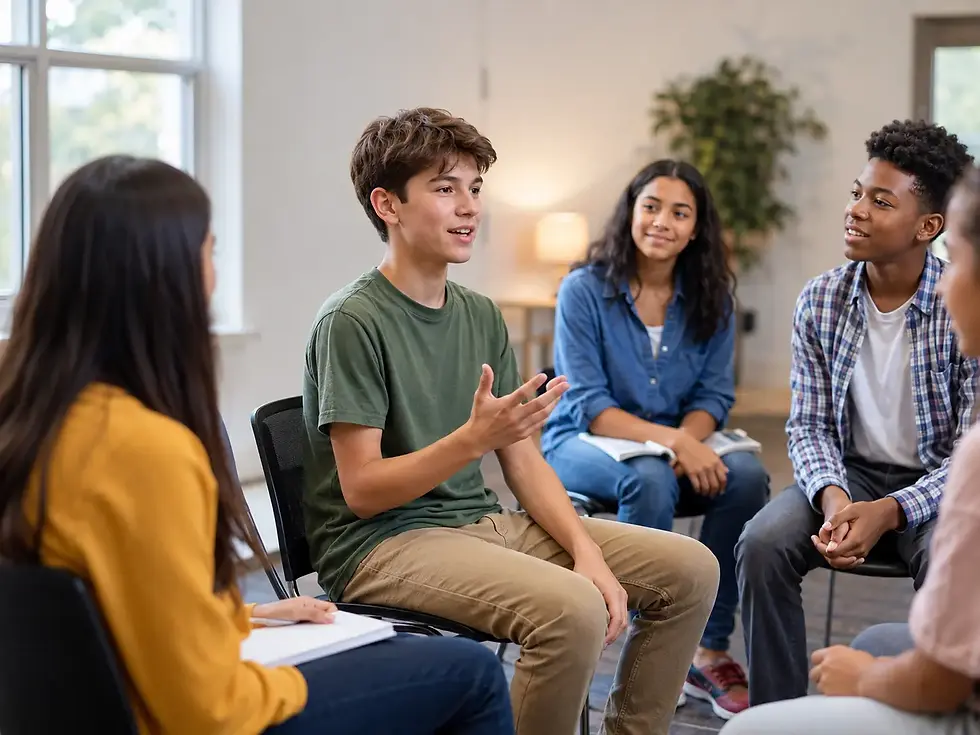
Most parents do not need to be convinced that children will disagree. It happens over homework, screen time, whose idea should be used in a group project, or whether a family rule feels fair. As children grow into teenagers, the subjects become more complicated, but the basic challenge stays the same: How do you say, “I see this differently,” without turning the conversation into a fight?
That is where debate is often misunderstood. Parents may picture a child learning to argue more, talk over people, or look for a way to win every conversation. A good debate class should teach the opposite.
Well-taught debate gives kids and teens a structured place to listen, think, speak, and respond. They learn that disagreement is not a personal attack, and that making a strong point does not require being rude. They also learn that the goal is not always to change someone’s mind. Sometimes the goal is to explain an idea clearly, understand another perspective, and leave the conversation with mutual respect intact.
Debate is not only preparation for a competition. It is practice for school, friendships, family conversations, interviews, leadership, and future workplaces. It helps students learn what to do when people do not agree, which is a situation every child will face.
Respectful Disagreement Is a Life Skill

A student can have excellent facts, clear logic, and a polished speaking voice, but disrespect can undo all of it. When a speaker interrupts, rolls their eyes, mocks another person, or treats a different opinion as foolish, people often lose confidence in that speaker. The audience may stop listening to the argument because the behavior has become the message.
Respect is not just about being polite. It is part of being credible.
This matters everywhere. In a classroom, a student may need to question a classmate’s idea without embarrassing them. In a friendship, a teenager may need to explain why something felt hurtful without attacking the friend’s character. In a group project, students may need to choose between competing plans. Later, in a workplace, they may need to challenge a proposal, give feedback, or disagree with a supervisor professionally.
These conversations go better when students understand one basic truth: Not everyone will agree with you, and that is okay.
Children can sometimes experience disagreement as rejection. If someone does not like their idea, they may feel that the person does not like them. Debate helps separate those two things. Two thoughtful people can hear the same information and reach different conclusions while still respecting one another.
That understanding takes pressure out of a conversation. Students can focus on the question, explain their reasoning, and remain curious about why someone else sees it differently.
Good Debate Begins With Listening
Debate may look like a speaking activity, but good debate begins with listening.
A student cannot respond thoughtfully if they have not understood what the other person actually said. In structured debate, students learn to listen for the main claim, identify the strongest supporting reason, notice the evidence, and take notes before preparing a response. They also learn not to interrupt.
The quality of that listening can change the entire tone of a disagreement. In a series of experiments examining difficult conversations, researchers found that high-quality listening, characterized by attention, understanding, and positive intentions, helped speakers become less defensive and less extreme in their positions. The research involved adults rather than children, so it should not be treated as direct evidence about youth debate classes. Still, the central lesson is relevant: people tend to think more openly when they feel genuinely heard. The study, “Listening to Understand: The Role of High-Quality Listening on Speakers’ Attitude Depolarization During Disagreements,” is available through PubMed.
Imagine two students discussing whether homework should be reduced. One says that long assignments leave less time for sleep, family responsibilities, and activities. A poor response would ignore those concerns and simply repeat, “Homework is important.”
A more thoughtful response might be: “I understand that students need time to rest and take part in other activities. I still think some homework is useful because it gives students a chance to practice difficult material. Maybe the better solution is shorter, more focused assignments.”
That answer does not agree with everything the first student said. It does show that the speaker listened.
Debate also teaches students to respond to the strongest part of an argument, rather than choosing one small point because it is easy to dismiss. They learn to answer what another person meant, not a distorted version of it.
This matters in daily life. Listening fully helps children respond to the real concern, rather than arguing against something the other person never intended to say.
Challenge the Idea, Not the Person

One of the most valuable lessons in debate is learning to challenge an idea without attacking the person who expressed it.
There is a name for the opposite approach: an ad hominem attack. It happens when someone responds to the person instead of addressing the argument.
Suppose a student argues that school should start later because teenagers need more sleep. Another student replies, “You only think that because you are lazy and hate mornings.” That response does not examine the claim about school schedules or sleep. It attacks the student.
Children and adults both fall into this pattern. Statements such as “You never understand,” “Only an idiot would think that,” or “You are just saying that because you are selfish” move the conversation away from the issue and toward blame.
A structured debate class gives students better language. Instead of saying, “You’re wrong,” they can say, “I see your point, but another way to look at it is…” Instead of saying, “That makes no sense,” they can say, “I think that argument needs more evidence.”
Respectful language does not require students to avoid disagreement or sound uncertain. They can still say that evidence is weak, a conclusion does not follow, or an argument overlooks an important fact. The difference is that they are evaluating the idea, not insulting the speaker.
This becomes especially useful when emotions are involved. A teenager may strongly disagree with a friend’s choice or a teammate’s decision. If they focus on the behavior, decision, or idea, they have a much better chance of being heard.
Evidence and Perspective Make Arguments Stronger

Most children have used some version of “because I said so” or “everyone knows that.” Adults do it too. We often feel certain before we have explained why.
Debate slows that process down.
Students learn that a strong opinion is not automatically a strong argument. They need reasons, examples, facts, and a clear connection between the evidence and the conclusion.
A student may say, “Schools should offer more clubs because it would be better.” A coach can ask: Better for whom? What problem would more clubs solve? What example supports the point?
The student might then explain that a wider range of activities gives more students a way to participate, meet peers, explore interests, or contribute to school life. The opinion is now supported by reasoning.
This is how debate builds critical thinking skills. Students begin to ask: What am I claiming? Why do I believe it? What evidence supports it? Is the source reliable? What might the other side say?
Research on debate and communication education has explored this connection for decades. One meta-analysis of communication and forensics education found that communication instruction was associated with improvements in critical thinking, with forensics participation showing the largest positive effect among the communication experiences reviewed. Much of this research involved older students and should not be interpreted as proof that any debate class will automatically produce the same result. It does, however, support the value of structured practice that asks students to analyze claims, examine evidence, and explain their reasoning.
That last question, “What might the other side say?” matters because students are often asked to argue a side they did not choose. A child who dislikes school uniforms may be assigned to argue in favor of them. A student who wants phones allowed in class may have to explain why restrictions could be useful.
The point is not to force students to change their beliefs. It is to help them understand how another person could reach a different conclusion. Understanding is not the same as agreeing.
When students practice both sides, they often notice details they missed. They may keep their original opinion, but now they can explain it more thoughtfully and recognize the strongest objection. They also learn that most issues are not divided into one smart side and one foolish side. People bring different experiences and priorities to the same question.
Perspective-taking is not always easy, even for capable students. A study involving 324 pupils across nine schools found that understanding and evaluating another person’s argument required students to follow that person’s claims, reasoning, and point of view. The researchers also found that students used a range of strategies to do this, with some finding it more challenging than others. The paper, “Interdisciplinary Perspective-Taking Within Argumentation,” highlights why perspective-taking should be treated as a skill that needs practice, not something children will automatically know how to do.
Staying Calm and Building Confidence

Disagreement can feel physical. A child’s face may get warm. Their heart may beat faster. A teenager who had a clear answer a moment earlier may suddenly lose their place when someone challenges it.
Structured debate gives students a safe place to practice that moment.
They learn to pause, take a breath, look at their notes, and decide what needs to be answered first. They practice responding instead of reacting. They also learn that being questioned does not mean they have been humiliated or that their entire argument has failed.
Students will sometimes forget a point, use the wrong word, or realize that the other speaker has made a fair observation. Debate teaches recovery. They can pause, restate the idea, acknowledge the point, and continue.
These habits help different personalities. A nervous student learns that an answer does not need to be perfect. A quiet student practices entering the discussion. A defensive or highly energetic student works on listening, slowing down, and leaving space for others.
The ability to regulate emotions continues developing throughout childhood and adolescence. In one study of typically developing adolescents, greater use of cognitive reappraisal, which involves reconsidering how a situation is understood, was associated with stronger everyday executive functioning. Suppressing emotions was associated with poorer executive functioning. The study was correlational, so it does not prove that one skill directly caused the other, but it helps explain why pausing and reconsidering a situation can be more useful than simply trying to hide a reaction. The research on executive function and emotion-regulation strategies in adolescents is available through PubMed.
This is also how debate can build confidence for kids without encouraging arrogance. Confidence does not mean being the loudest person in the room or refusing to change your mind. A confident speaker can explain a point clearly, listen carefully, and say, “That is a fair point,” when someone else has earned the acknowledgment.
That kind of confidence is steady rather than showy. It allows a student to speak up without needing to overpower anyone else.
Debate Skills Follow Kids Into Everyday Life

The most useful debate skills often appear outside a formal debate.
In classroom discussions, students need to contribute an idea and explain their reasoning. During group projects, they may need to recommend a plan, divide responsibilities, or disagree about which approach will work best. In school presentations, they may need to answer an unexpected question without becoming flustered.
Friendships also involve disagreement. A teenager may need to say, “I felt left out when the plans changed,” rather than, “You are a terrible friend.” The first statement opens a conversation. The second makes the other person defend their character.
At home, respectful disagreement can help children make a thoughtful request. It does not mean every family rule becomes a formal debate. It means a child can explain a concern, listen to the response, and accept that being heard does not guarantee getting the answer they wanted.
Debate also supports leadership skills for children and teens. A good leader needs to hear competing ideas, ask useful questions, and help a group move toward a decision. Interviews and future workplace conversations require the same habits. Students may need to think on the spot, support an answer with an example, receive feedback, or disagree professionally.
This is why public speaking and debate work well together. Public speaking helps students organize and deliver a message. Debate adds listening, analysis, response, and perspective-taking.
Parents searching for kids public speaking or debate classes are often looking for more than competition skills. They want their child to express ideas clearly, handle pressure, and communicate respectfully. Debate for kids can support those goals without asking a child to change their personality.
What Parents Should Look for in a Debate Class

A good debate class should feel active and challenging, but also safe and well structured. It should not reward shouting, sarcasm, humiliation, or winning at any cost.
Parents should look for clear rules about taking turns, listening, and responding to ideas without personal attacks. Topics should be age-appropriate. Younger students may debate familiar questions about recess, pets, school lunches, or homework. Older students can explore more complex issues with guidance on research and evidence.
Students should have regular opportunities to speak, listen, and respond. A class that only teaches debate terms will not provide the same growth as one that gives students repeated practice.
Feedback should be specific. “Good job” may feel encouraging, but it does not tell a student what to do next. A useful coach might suggest making the main claim clearer, answering the strongest opposing point, slowing down, adding an example, or replacing a personal comment with a response to the argument.
The class should support different experience levels. Beginners may need sentence starters or shorter speaking turns, while experienced students may be ready for deeper research and competition.
Parents should also consider the format that best fits the child. A student who needs a broader introduction to speaking may be comfortable beginning with one of the Kids & Teens public speaking options. A student who wants supportive practice over a shorter period may prefer a Confident Communicator Course. Students who enjoy formal speaking, sustained practice, and greater challenge may be more suited to the Competitive Program. A child preparing for a particular presentation, speech, interview, or personal communication goal may benefit more from One-on-One Coaching.
The important question is not which option sounds most advanced. It is which environment will give that particular student the right balance of challenge, support, and meaningful practice.
Most importantly, parents should see structure, not shouting. Students should be able to make mistakes, receive coaching, and try again.
At Stand Up and Speak, debate is taught as part of a broader approach to communication. Kids and teens practice public speaking and debate, listening, confidence, critical thinking, and respectful communication through structured activities and coaching.
Depending on a student’s age and goals, families may encounter these skills through Kids & Teens Public Speaking, Debate, the Competitive Program, Confident Communicator Courses, or One-on-One Coaching. The purpose is not to create children who argue about everything. It is to help them handle disagreement with more thought, control, and respect.
A child who can say, “I see it differently, and here is why,” while still listening to the answer has learned something much bigger than how to win a debate.
Frequently Asked Questions
What age should kids start debate?
Children can begin with simple, age-appropriate debate activities in the early elementary years. Younger students benefit from familiar topics, short speaking turns, and sentence starters. Older students can work with research, rebuttals, and more formal structures. The right starting point depends on the child’s attention span, communication skills, and comfort level.
Does debate make kids argumentative?
A well-run class should not teach children to challenge every request or turn every conversation into a contest. Debate teaches listening, evidence, turn-taking, and respectful disagreement. Students learn that making a thoughtful point is different from interrupting, insulting, or refusing to listen.
Can shy kids benefit from debate?
Yes. Shy students can begin with partner work, prepared responses, or short speaking activities. The goal is not to turn a quiet child into the loudest person in the room. It is to help the student speak clearly when they have something important to contribute.
How does debate teach respectful disagreement?
Students practice listening to the full argument, acknowledging another perspective, and supporting their response with reasons and evidence. They also learn language that challenges the idea rather than the person.
Is debate only for competitive students?
No. Competitions can be valuable for students who enjoy them, but debate skills are useful in classroom discussions, presentations, friendships, group projects, family conversations, interviews, and leadership roles.
What skills do kids learn in debate?
Students practice listening, organization, research, reasoning, note-taking, public speaking, rebuttal, emotional control, confidence, and critical thinking. They also learn to consider more than one side of an issue.
How often should kids practice debate?
Regular, manageable practice is usually more helpful than rare, lengthy sessions. A weekly class can provide consistency, while short activities at home or school can reinforce the skills.
What should parents look for in a debate class?
Look for age-appropriate topics, clear expectations, regular speaking opportunities, listening practice, useful instructor feedback, and a respectful atmosphere. Strong debate classes for kids should support beginners while continuing to challenge students with more experience.
Families looking for more practical guidance on public speaking, confidence, debate, and communication can explore the Stand Up and Speak blog.


Comments